

What Does Christmas Have to Do with the Nations? (~15 min read)
Part 1: The Unfulfilled Promise
When we gather around nativity scenes each December, we rarely pause to consider the revolutionary message encoded in the wise men's journey to Bethlehem. These mysterious figures from the East weren't mere supporting characters in the Christmas story; they were the fulfillment of an ancient prophecy that revealed the breathtaking scope of Jesus's mission from the very moment of his birth.
Isaiah's Vision of Global Worship
Seven centuries before Christ, the prophet Isaiah painted a stunning vision of Jerusalem's future glory. In Isaiah 60, he described a day when darkness would cover the earth, but the glory of the Lord would rise upon his people. Nations would stream to this light, bringing their wealth as tribute:
"Arise, shine, for your light has come, and the glory of the LORD rises upon you... Nations will come to your light, and kings to the brightness of your dawn... Herds of camels will cover your land, young camels of Midian and Ephah. And all from Sheba will come, bearing gold and incense and proclaiming the praise of the LORD." (Isaiah 60:1,3,6 NIV)
In Isaiah's vision, the light and glory of the Lord would shine upon Jerusalem, and the city itself would become a beacon drawing the nations. The wealth of Arabia would flow into Zion. Kings would come to the brightness of the city's rising. This wasn't metaphorical language to Isaiah's original audience; these were real places, real peoples, real trade routes they knew intimately.
Midian lay in northwestern Arabia, along the Gulf of Aqaba, the very region where Moses had fled and married into a Midianite family. Ephah was Midian's son, representing a tribal subdivision of the Midianites. Sheba referred to the kingdoms of southern Arabia, famous for their wealth, spices, and the frankincense trade that made them fabulously rich. When Isaiah's audience heard these names, they pictured camel caravans laden with Arabia's treasures making pilgrimage to a glorified Jerusalem.
Seven Centuries of Waiting
For first-century Jews, this prophecy remained painfully unfulfilled. The nations hadn't come streaming to Jerusalem. The wealth of Arabia hadn't poured into the temple. The promised glory seemed like a distant dream under Roman occupation. Jerusalem wasn't shining, it was occupied, compromised, waiting.
The Nabatean Arabs controlled the incense routes to the south. The Herodian dynasty, though nominally Jewish, represented collaboration with Rome rather than the righteousness that would draw nations. The temple stood, but it wasn't radiating the kind of glory that would compel Arabian kings to bring tribute. If anything, the situation looked worse than ever.
Yet the prophecy remained in their Scripture, a promise waiting for fulfillment. Surely someday, somehow, God would restore Jerusalem to such glory that the nations, especially those Arabian tribes Isaiah specifically named, would recognize Israel's God and stream to worship him.
The Light Wasn't Where They Expected
Here's the shocking twist in Matthew's telling of the birth narrative: the light that drew the nations wasn't shining from Jerusalem. It was shining from a child.
When the Magi arrived in Jerusalem, the logical destination, the place where Isaiah said the light would shine, they found nothing but darkness and cold religion. Herod knew nothing of the King's birth. The chief priests and scribes had to consult their scrolls to determine where the Messiah should be born. The religious establishment was blind to what was happening in their own backyard. Jerusalem, far from being a beacon to the nations, was murderous toward its own Messiah.
The Magi had to leave Jerusalem to find the light. The star led them away from the city, away from the temple, away from the centers of religious and political power. It led them to Bethlehem. And there, in a house, they found not a glorified city but a toddler.
This is Matthew's radical reinterpretation of Isaiah 60: the glory of the Lord didn't rest on Jerusalem's walls. It was wrapped in swaddling clothes. The light drawing the nations wasn't emanating from Zion's temple. It was shining from the face of a child named Jesus.
Isaiah prophesied that nations would come to "your light", and they did. But the light was a person, not a place. The glory was incarnate, not institutional. God's presence wasn't contained in buildings or cities but embodied in his Son.
From City to Child: A Theological Revolution
This completely reframes the prophecy. The Arabian traders didn't come to pay tribute to Jerusalem's restored glory. They came to worship a child who was himself the glory of God. They didn't bring their gifts to deposit in the temple treasury. They offered them directly to the One who would become the true temple, the meeting place between God and humanity.
Matthew is showing his Jewish readers something that would have been both shocking and illuminating: God was keeping his promise, but in a way that exceeded their categories. The fulfillment wasn't less than what Isaiah predicted; it was infinitely more. A glorious city could only draw people to a location. A glorious Savior could transform people from every location.
What This Means for Us
When we read Isaiah 60 after encountering Matthew's Gospel, we understand what the prophet couldn't fully grasp: the light of the world isn't geographic, it's personal. The glory that draws the nations isn't architectural, it's incarnational. God's plan was never merely to make Jerusalem impressive enough that people would admire it. His plan was to give the world his Son, so compelling in his righteousness, so radiant in his glory, that people from every nation would be drawn to worship him.
The Magi came to Jerusalem expecting to find a king. They found political paranoia and religious indifference. But when they came to Bethlehem and found a child, they fell down and worshiped. The lesson is clear: God's glory is found in Jesus, and only Jesus can truly draw the nations.
Part 2: The First Gentile Worshipers
From the East: What Matthew's Readers Heard
When Matthew writes that Magi came "from the east" (apo anatolōn), his first-century Jewish audience wouldn't have been thinking of distant Persia or mysterious Babylon. In the Jewish geographical imagination, "the east" primarily meant one place: Arabia.
This wasn't arbitrary. The Hebrew Bible consistently associates "the east" and "the people of the east" (bene qedem) with the Arabian Peninsula and its inhabitants. When Jacob fled from Esau, he went "to the land of the people of the east", the region of Haran, on the edge of the Arabian desert. Job, the righteous sufferer, was "the greatest of all the people of the east." The Queen of Sheba, who brought gold, spices, and precious stones to Solomon, came from Arabia to the south and east.
For Matthew's Jewish readers, steeped in their Scriptures, "wise men from the east" would immediately evoke these biblical precedents. They would think of the Arabian wilderness, the land of Midian where Moses fled, the territories of Ishmael's descendants, and the kingdoms mentioned throughout the prophets. The East was the desert peoples, the traders and travelers, the Gentile neighbors who both threatened and fascinated Israel throughout its history.
The Gifts That Revealed Their Origin
The traditional focus on the gifts of gold, frankincense, and myrrh typically centers on their symbolic meaning for Jesus's identity: gold for royalty, frankincense for deity, myrrh for suffering and death. These interpretations hold value, but they may cause us to miss what would have been immediately obvious to Matthew's original readers.
The gifts themselves are geographic markers, fingerprints that reveal the visitors' origin. Frankincense wasn't produced in Persia or Babylon, it was harvested from the arid regions of southern Arabia, particularly the kingdoms of Sheba and Hadramaut in what is now Yemen and Oman. The resin from the Boswellia trees was so valuable it was literally worth its weight in gold, and the trade in frankincense made Arabian merchants extraordinarily wealthy.
Myrrh came from the same regions, harvested from Commiphora trees in southern Arabia and the Horn of Africa, which were under the control of Arabian traders. Gold flowed through Arabian hands as they served as middlemen in the vast trade networks connecting Africa, India, and the Mediterranean.
When combined with Matthew's phrase "from the east," the identification becomes unmistakable. These weren't just "wise men from somewhere far away." These were Arabian sages, possibly tribal chieftains or merchant princes, traveling the ancient incense routes that connected southern Arabia to the Mediterranean world. They brought the very products that made their region famous, and that Isaiah had specifically prophesied would come to the Messiah.
The First Gentile Worshipers Were Arabs
Here's a fact that should reshape how we think about Christian history: the first Gentiles to worship Jesus were Arabs. Not Romans. Not Greeks. Not Europeans who would later dominate the story of Christianity's spread. Arabs from the Arabian Peninsula were the first non-Jews to recognize and bow before the Messiah.
This isn't a minor detail; it's a theological earthquake. Matthew is showing us that God's redemptive plan began its fulfillment among the peoples of Arabia. The very first expansion beyond Israel's borders went east and south, not west and north. Before the gospel reached Rome, Athens, or Alexandria, it drew Arabian worshipers to a stable in Bethlehem.
Early church fathers recognized this. Justin Martyr and Tertullian both identified the Magi as coming from Arabia rather than Persia. This wasn't speculation; it was recognition of the geographic and prophetic connections that would have been clear to readers familiar with Isaiah's prophecy and the trade patterns of the ancient Near East.
Shepherds and Sages: A Deliberate Frame
Matthew's Gospel (combined with Luke's account) carefully constructs a narrative frame that first-century Middle Eastern readers would have immediately recognized. On one side, we have Jewish shepherds from the fields around Bethlehem: local, poor, ceremonially unclean by virtue of their occupation, yet among the first to worship the newborn King. These were insiders to the covenant community.
On the other side, we have wealthy Arabian traders: Gentiles, foreigners, outsiders to God's covenant with Israel. They traveled hundreds of miles across desert terrain, bringing costly gifts that spoke of commercial wealth and international connections.
The contrast is stark and deliberate:
The shepherds lived within sight of Bethlehem and probably walked less than an hour to reach Jesus
The Magi traveled for weeks or months across the desert wilderness
The shepherds came with nothing but their witness to angelic glory
The Magi came laden with the wealth of Arabia
The shepherds were outcasts within their own societyThe Magi were likely men of status and influence in theirs
Yet both groups fell to their knees in worship. Both recognized the infant king. Both became witnesses to the world of what God had done.
This isn't accidental. Matthew is showing us that from the very beginning, Jesus's arrival was framed by both Jew and Gentile, insider and outsider, poor and rich, local and foreign. The shepherds represent Israel; the Magi represent the nations. And both are drawn to the same light.
Why This Matters
The presence of Arabian Magi at the manger forces us to reckon with several crucial truths:
First, Arab peoples have always been central to God's redemptive plan. They weren't late additions or secondary targets. From the first moments of Jesus's life, Arabs were seeking him, worshiping him, offering him their best.
Second, God's heart for the nations wasn't a New Testament innovation. It was woven throughout the Old Testament, from Abraham's calling to be a blessing to all nations, through Isaiah's vision of global worship, to the Magi kneeling before the infant Christ. The Arabian visitors at the manger were the down payment on God's ancient promise.
Third, the gospel crosses every boundary. The same Christ who was worshiped by impoverished Jewish shepherds received the homage of wealthy Gentile traders. No one is too far outside God's covenant love, and no one's position inside guarantees them anything apart from humble worship.
The question Matthew forces his readers to confront is this: If Gentiles from Arabia recognized Israel's King, will Israel herself? If foreigners will travel across deserts to worship him, will those who live in sight of Bethlehem? The inclusion of the Magi isn't just about the scope of salvation, it's a challenge to God's people not to miss their own Messiah.
Part 3: An Urgent Mission
A Tragic Irony
The tragic irony of Christian history is this: the people group that produced Christianity's first Gentile worshipers has become one of the least reached regions on earth. The Arabian Peninsula, which sent its sages to worship Jesus at his birth, today contains millions who have never heard the gospel message with clarity.
When we look at the data on the Arabian Peninsula, the scope of the challenge becomes clear. Saudi Arabia, home to over 35 million people, reports less than 0.1% evangelical Christians, making the entire region full of Frontier People Groups. The Saudi Najdi Arabs of Saudi Arabia, numbering over 10 million, are classified as a frontier people group with virtually no Christian presence. The Saudi Hijazi Arabs along the Red Sea coast,living in the very region ancient Midian once occupied, are a significant Frontier People Group.
Yemen, likely home to the ancient kingdom of Sheba, faces an even more desperate situation. With over 30 million people and a catastrophic civil war, Yemeni Arabs are among the world's most isolated peoples. The Mahra people of southeastern Yemen and Oman, who still speak a distinct Semitic language and maintain ancient tribal traditions, have almost no gospel witness.
Oman, whose southern regions (ancient Sheba) produced the frankincense that Magi likely brought to Jesus, remains closed to open evangelism despite its wealth and modern infrastructure.
The lands of Midian, Ephah, and Sheba that Isaiah prophesied would bring gifts to the Messiah are now places where Jesus's name is barely known. The regions that sent the first Gentile worshipers to Bethlehem are now classified as Frontier People Groups.
This Should Provoke Us
This reality should disturb every follower of Jesus. If God cared enough about Arabian peoples to reveal his Son's birth to them first among the Gentiles, how can the church treat them as an afterthought in missions today?
The Christmas story isn't just ancient history, it's a living mandate. The Magi's journey from Arabia to Bethlehem should be matched by a reverse journey, followers of Jesus going to Arabia with the whole message of the gospel. The gifts those ancient sages brought should be answered by the greatest gift we can offer: the good news of Jesus Christ.
Consider what it means that Arabs were first: God was making a statement about his priorities. He was showing that no people group is beyond his reach, no culture too foreign to his grace, no region too remote from his light. The Magi weren't an exception to God's mission, they were a preview of it.
Recovering a Biblical Vision
The modern church often carries unconscious assumptions about who the gospel is "naturally" for. We've created mental maps where Christianity flows from Jerusalem to Europe to America, forgetting that the first Gentile movement was eastward and southward into Arabia.
When we recenter the Christmas story with the Arabian Magi in view, several things become clear:
The unreached status of Arab peoples today is a historical tragedy, not a theological inevitability. There's nothing about Arab culture, Islam's presence, or geographical challenges that makes Arab peoples unreachable. The first Arabs who heard about Jesus came searching for him across impossible deserts. Why shouldn't modern Arabs have the same opportunity?
The barriers are real: restrictive governments, Islamic law, social pressure, and in many cases, active warfare. Saudi Arabia forbids Christian worship for its citizens. Yemen is torn by civil war. But these are challenges to overcome, not excuses for inaction. The early church faced similar obstacles and still reached across cultural and religious boundaries.
Our missionary priorities should reflect God's. If Arabian peoples were important enough for God to include in the Christmas story, they should be important enough for the church to prioritize today. The regions that sent the first Gentile worshipers should not be the last to receive sustained gospel witness.
Current missions' investment in the Arabian Peninsula remains disproportionately low compared to other regions. Part of this stems from the difficulty of the work: restricted-access nations require creative platforms, long-term commitment, and workers willing to invest years building relationships before seeing any fruit. But difficulty has never been a biblical reason to avoid a mission field.
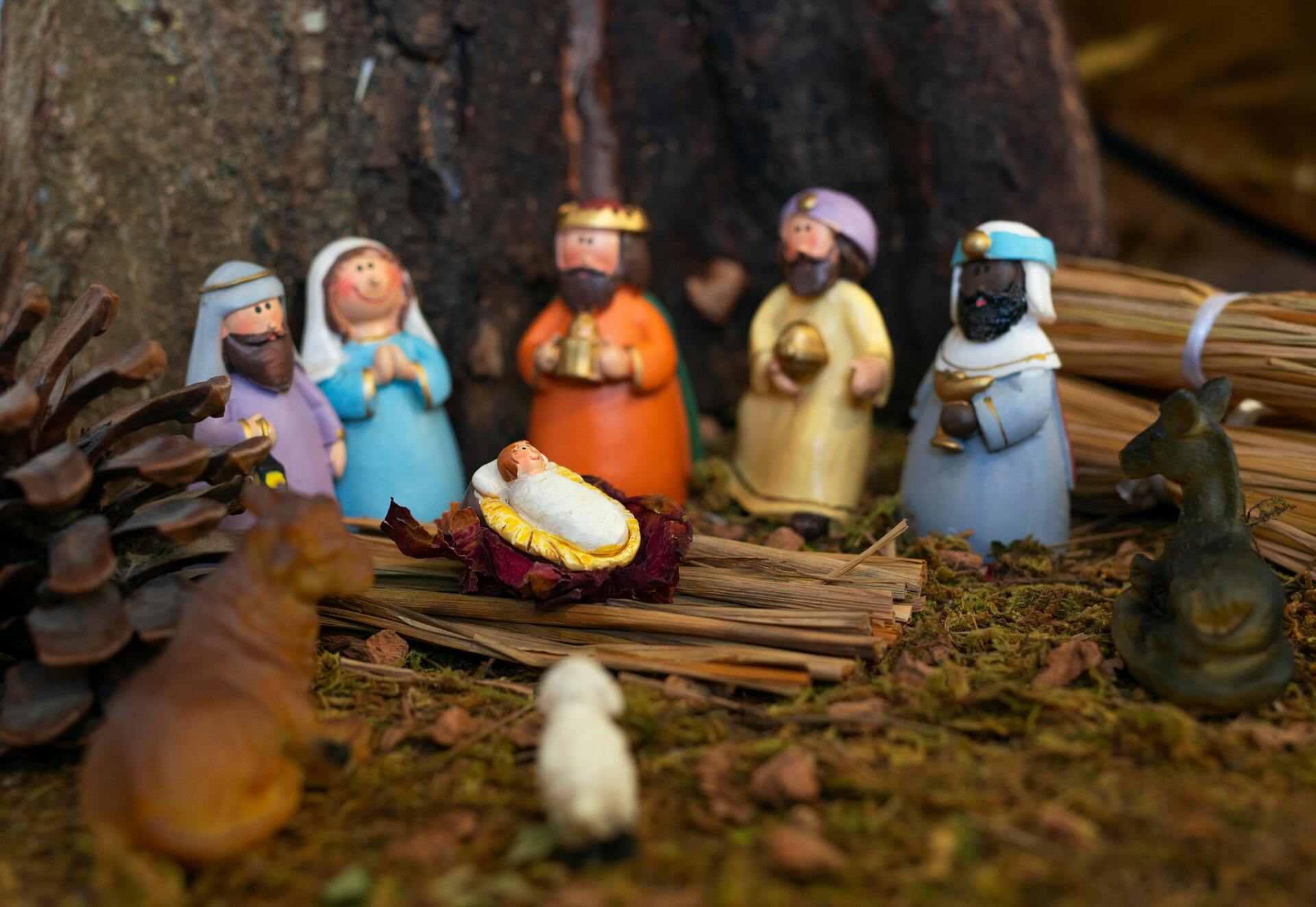
Christmas is inherently missional toward the Arab world. Every nativity scene with wise men from the east is a reminder: Jesus came for Arabs. God revealed himself to Arabs. Arabs worshiped Jesus before any European or American did. The gospel is theirs.
Practical Steps Forward
What does it look like to take this seriously? Adopt an Arab Frontier People Group. With adoption several concrete actions emerge:
Prayer must become specific. Instead of vague prayers for "the Muslim world," we should pray for the Saudi Najdi by name. For the Yemeni Arabs suffering in civil war. For the Mahra people, preserving their ancient language. For the Hijazi Arabs along the Red Sea coast. For example, the Joshua Project provides detailed profiles of these groups, including their cultures, needs, and spiritual status. Use them.
Support must become strategic. Organizations working among Arabian peoples need workers, funding, and prayer support. These ministries often work quietly, under the radar, using business platforms or humanitarian aid to build bridges. They need the church behind them.
Going must become viable. We need more workers willing to learn Arabic, move to the Gulf states or surrounding nations, and invest years in relationship-building. The Arabian Peninsula needs teachers, medical professionals, business people, and aid workers who are also disciples of Jesus, living out their faith authentically in restricted contexts.
The Magi's Star Still Shines
When we celebrate Christmas this year, let's recover the complete vision of what those wise men from the east represent. They weren't exotic decorations in the nativity scene; they were the first fruits of a harvest God intended to reap from every nation, tribe, and tongue.
The star that led Arabian sages to Bethlehem still shines for all who will follow it. The light that drew them draws still. But now the responsibility falls on us, those who know the full story, who have received the complete gospel, to ensure that their spiritual descendants have the same opportunity.
The Saudi Najdi, the Yemeni, the Mahra, the Hijazi, these are not just statistics. They are the descendants of the peoples Isaiah prophesied about. They are the relatives of those who first brought gold, frankincense, and myrrh to Jesus. They are people for whom Christ died, whom God loves, whose worship belongs in the chorus around the throne.
A Question Demands an Answer
What does Christmas have to do with the nations? Everything. And what the church does about unreached Arab peoples reveals whether we truly believe it.